Think thrice before you post

Updated: Jul 11, 2018
JULY 2, 2018
BY TEH KEAN HOOI & TEOH MIN JIEH

One day when you woke up early in the morning and decided to open up the Facebook app on your phone to have a look at the social feed updates only to stumble upon a photo of you accidentally falling asleep in class being uploaded as a friend’s cover photo on his account.
This is a horrific encounter for me earlier this year as I felt embarrassment straight away and wondered if any of my lecturer or superior have seen this suggestive photo and bore a bad impression of me as a student or an employee.
Yes, social media is that dangerous as you do not know when someone has taken a photo or a video of you in moments that you probably would not want to share with anyone else.
Nevertheless, it is a platform which the modern generation uses to communicate and socialise with each other and it also helps some individuals to engage themselves in a community group more actively by updating statuses, posting images and videos.
Many people believe the images and captions they upload on their social media profiles portray their life. It represents their life as a whole and also their experiences in life.
However, some individuals misuse the social media as a platform to portray a different image of other individuals, mostly on the negative end.
According to a recent article on Healthy Place, people can utilise social media to boost their confidence and raise their self-esteem but sometimes it is used in an unhealthy manner thus affecting them as well as others too.
Han Chiang University College of Communication counsellor Eric Ooi said such action or behaviour is not considered as ‘illegal’ or ‘unlawful’ and he would substitute those words with ‘unethical’.
“Unethical social media posting is a practice beyond the limited domain of our law and it falls under a dichotomous region, a morally grey area.
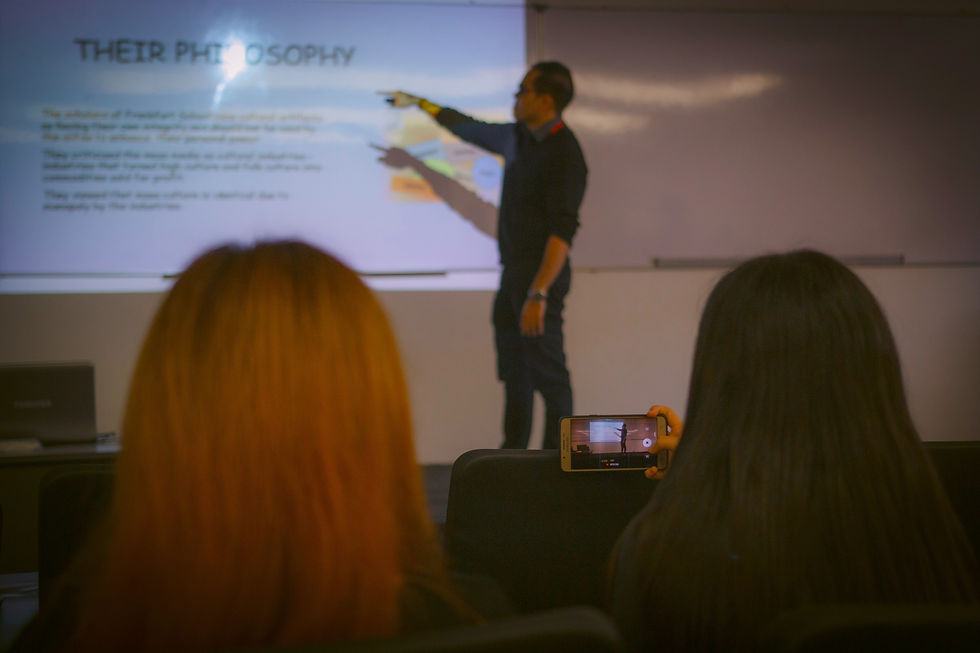
“It definitely does not sound right to post someone’s photo without consent since it would be a form of disrespect and it does not allow the owner to approve of the picture before being displayed on the Internet,” he said.
As for those who disagree with this popular culture going on in the society today, the good news is there is still a place for you and me.
Ooi said we can constantly notice a sense of dissatisfaction shown by those who suddenly found out that their photos were being misused based on mere observation on popular social networking sites, notably Facebook.
“If you take a person’s photo that could deteriorate or completely destroy the person’s image, then it is an invasion of privacy due to the act of involuntary exposure.
“Those who welcome it in a positive manner might be craving for attention as they treat this as an opportunity for free publicity.
“For me, those who are responsible should be punished in some ways but no harsh penalties can be imposed on these so-called offenders at the moment,” he commented.
“Occasionally, people take their personal grudges a step further and extend their personal conflict to social media.
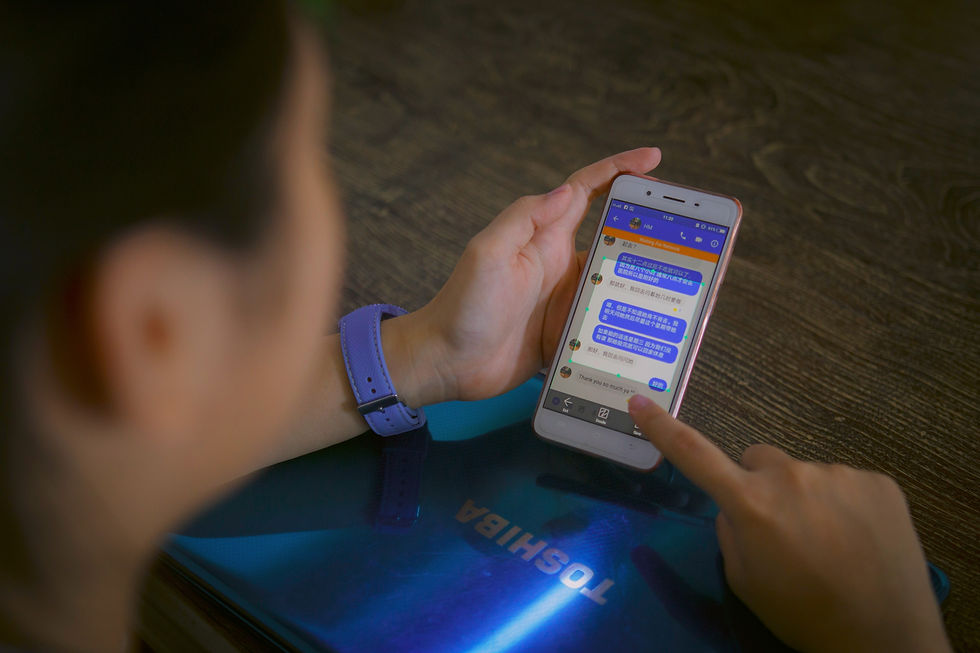
“They saved the entire conversation after a personal quarrel and then posting it on the poster’s page in order to gain leverage against the perceived opponent since he has his supporters there.
“Postings that don’t depict the actual scenario should be condemned too because it indirectly tarnishes the reputation of the victim.
“For instance, a student could be taking a nap during in-between breaks during class and this is encouraged for mental recharging purposes in order to enhance focus but some may misinterpret a picture of a student sleeping in class, therefore labelling the person as being lazy or undisciplined,” he illustrated.
Ooi added that in order for the community to be aware of this debatable behaviour, all of us can unite and make a commitment to minimise such practices.
He said highlighting the sorrowful moments experienced by the victims can provide educators room to induce the sense of empathy to the listeners.
In an interview with several individuals between the age of 18 and 45, many claimed to be victims and offenders of this behaviour.
Frankly, most of us somehow know the implications of such behaviour but often times we are overruled by impulsive emotions then we posted something irreparable.
You might make such postings in order to entertain yourself and the people around you simply because some photos or videos are worthy of becoming memes.

What we might not think through is the feeling and the impact it might have on the victims as incidents like these would scar them for life and the worst case scenario is they would fall into depression due to the lack of self-esteem, and by not having a place in the society they could eventually take their own lives.
It is very hypothetical and maybe a little bit too exaggerating but posting is not supposed to be made without careful consideration.
Saying sorry or feeling guilty after the action does not help at all.
So be mindful that we should think thrice before we post.
(The video provides a guideline to Oxford Social Media Etiquette. We can seek to understand and employ ethical practices in our daily online lives too.)
TAGS / KEYWORDS :


Comments